Back to feed
Society
From Dragon Kilns to Famille Rose: Reading Jingdezhen’s Thousand Years of Kiln Fire in a Museum
The group enters the permanent exhibition hall of the China Ceramics Museum in Jingdezhen
Eurasia Times, Jingdezhen — Reporter Wang Zilong
On the afternoon of October 19, a group of overseas Chinese media arrived at the China Ceramics Museum in Jingdezhen. Above the entrance to the permanent exhibition hall, golden characters reading “the peak of the porcelain industry is this capital” (瓷业高峰是此都) stood solemn and striking, and light from the glass dome fell on people’s shoulders. Putting on their guide headsets, everyone filed into the hall to begin a close conversation with a thousand years of kiln fire.
What meets the eye is a chronicle written in clay and fire: the soft warmth of the Tang and Song, the calm of Yuan blue-and-white, the splendor of Qing famille rose. Ceramics from different periods meet in the display cases, and the changes in glaze, pattern and shape record each era’s aesthetic tastes and porcelain-making skills. Jingdezhen has more than two thousand years of ceramic-making history, over a thousand years of official-kiln history and over six hundred years of imperial-kiln history, and these long measures of time become visible objects, one after another, in the exhibition hall.
The day before, the group had attended the opening ceremony of the 2026 China Jingdezhen International Ceramics Expo at Taobocheng and toured the exhibition halls. If the expo presents the present and future of the Jingdezhen ceramics industry, then this lesson in the museum traces where it came from.
Jingdezhen, where this museum stands, carries special weight this year. In July 2026, the “Jingdezhen Handmade Porcelain Industry Heritage” was formally inscribed on the World Heritage List, filling the gap of a “porcelain” theme in world cultural heritage and pioneering a new paradigm of “industrial-chain heritage inscription”: what is protected is not an isolated monument, but a complete chain from raw-material mining to finished firing. Walking into the hall with this background, every exhibit seems like a coordinate on that chain.
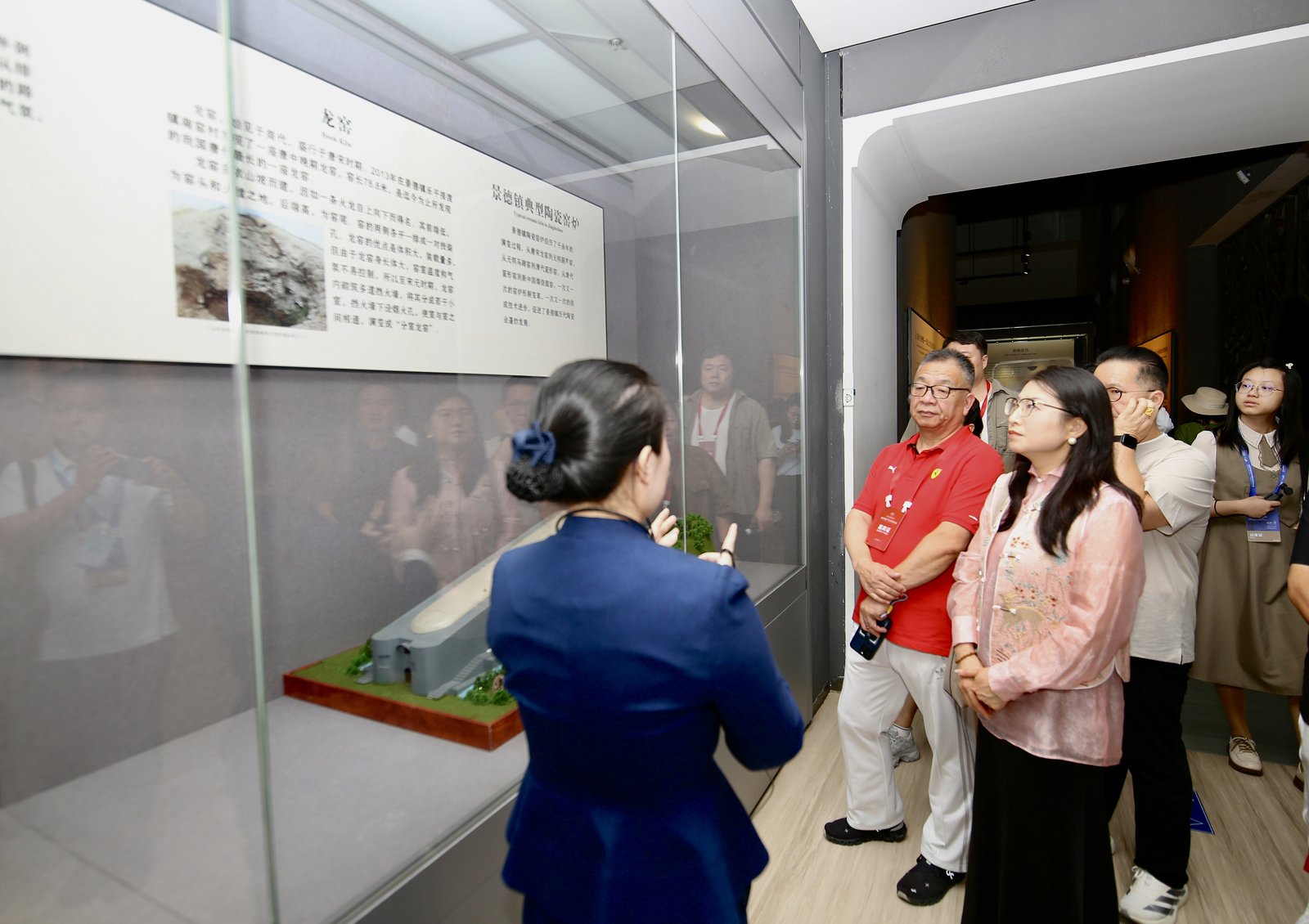
A guide introduces the dragon kiln to members of the group
In front of the dragon-kiln model, a guide introduced the typical ceramic kilns of Jingdezhen. A small model lets one see how, before porcelain was born, those tongues of kiln fire were tamed — it was kilns like this, together with experience passed down by craftspeople generation after generation, that let clay transform into porcelain under high heat. The permanent exhibition’s theme is “Jingdezhen Porcelain, the Porcelain Industry, and the History of Urban Development,” and kilns are only one link: from raw materials and fuel to firing and export, each link interlocks, and the fate of a city is closely intertwined with the rise and fall of a craft. Members of the group gathered around the display case and listened intently.
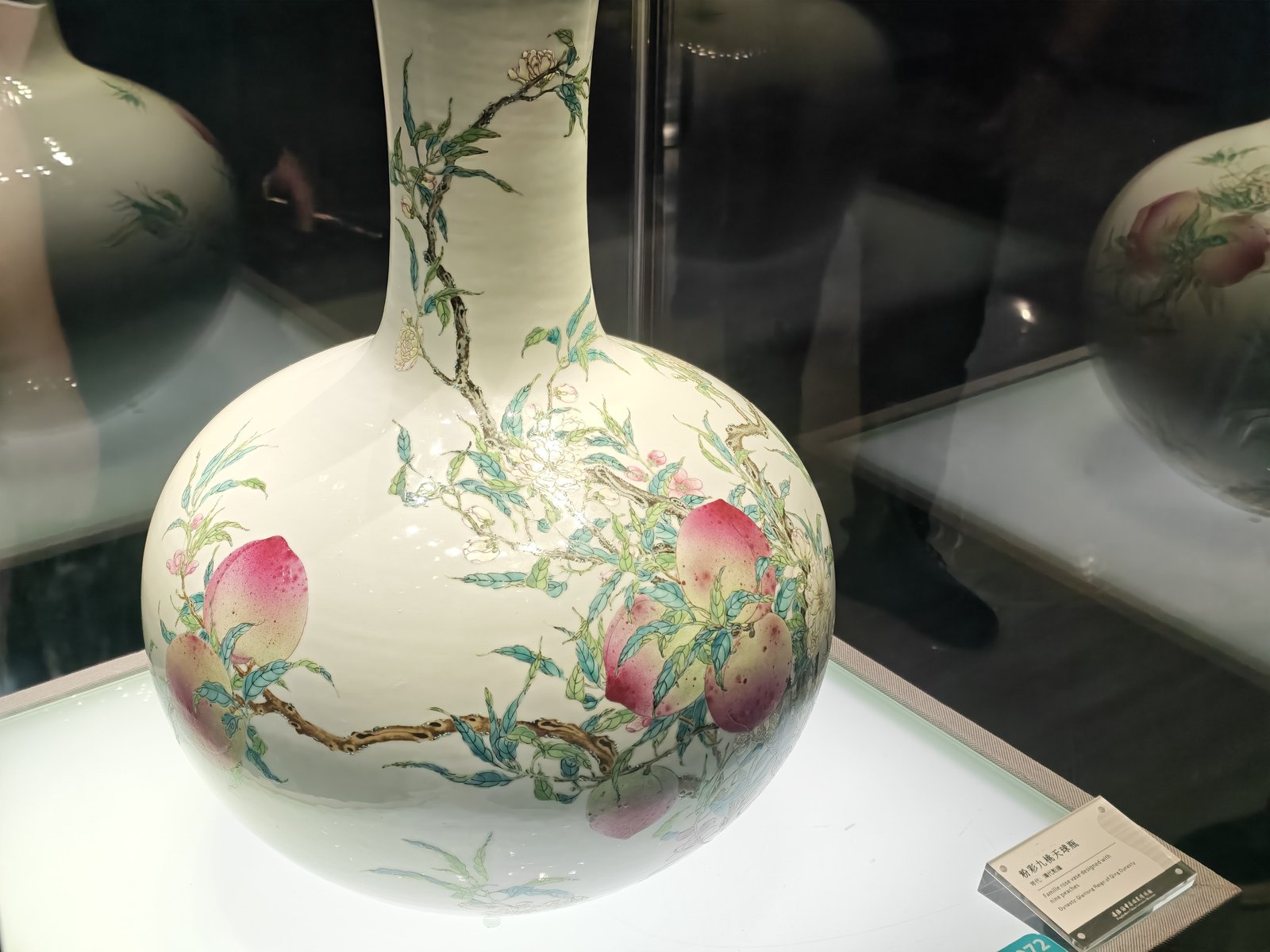
Famille rose celestial globe vase with nine peaches from the museum’s collection (Qianlong reign, Qing dynasty)
In a display case, a famille rose celestial globe vase with nine peaches from the Qianlong reign of the Qing dynasty stands quietly in the light. Famille rose is one of the representative colored porcelain types of Qing-dynasty Jingdezhen, known for its soft and delicate tones. On the vase, plump peaches blush pink and green, branches and leaves stretch out and flowering boughs slant across, the fine painting making the glaze seem to have been dyed by spring; and since the peach symbolizes longevity in traditional Chinese culture, a single object holds both the craftsperson’s ingenuity and people’s hopes for a good life.
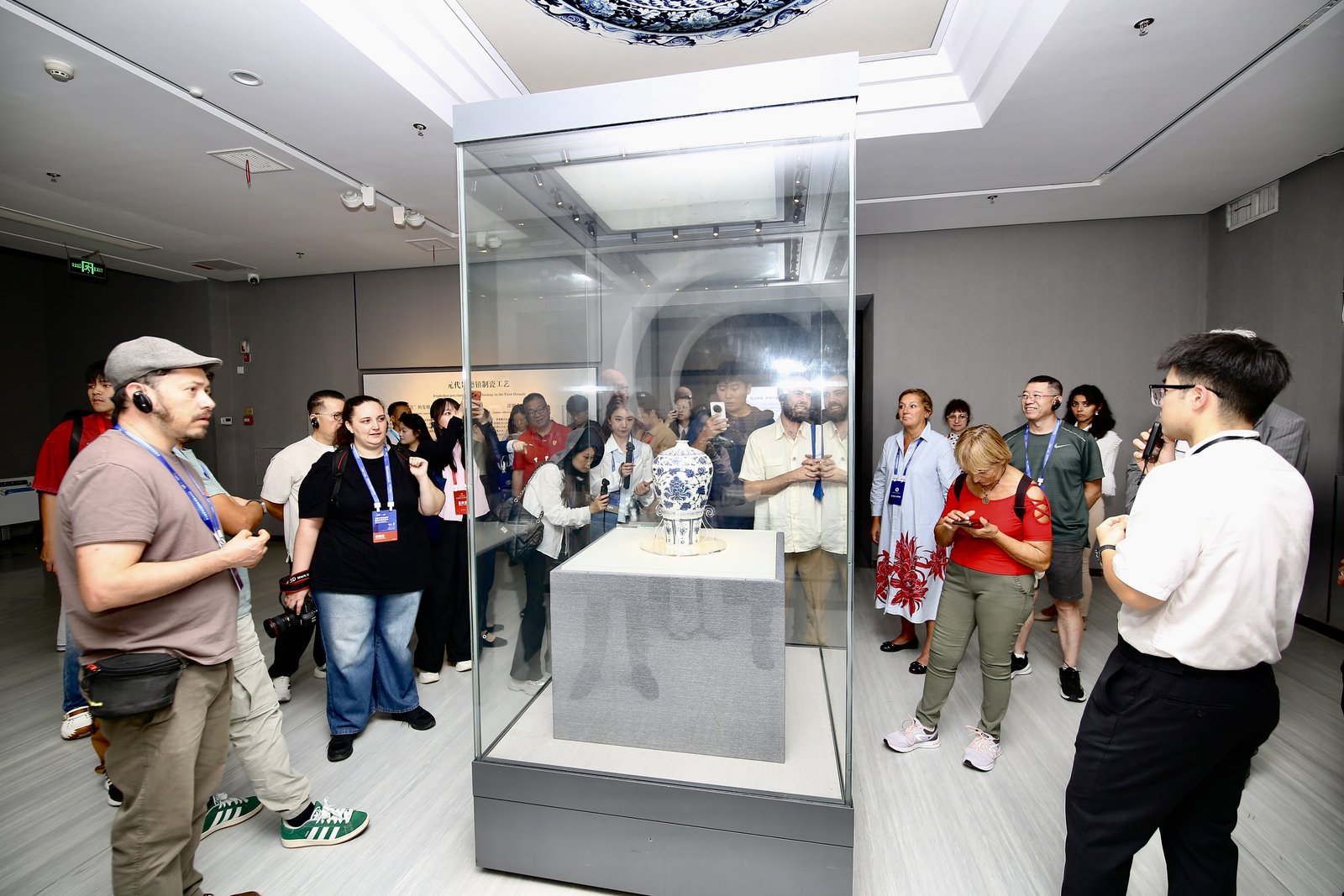
The group listens to the guide in front of the blue-and-white porcelain display case
In the section on Yuan-dynasty Jingdezhen porcelain-making, a blue-and-white vase stood in the center of a glass case, its interlocking floral scrolls looking calm and clear under the lights. Blue-and-white uses cobalt to paint patterns on the body, which is then covered with a transparent glaze and fired at high temperature; blue and white set each other off and stay fresh through the years. In the Yuan dynasty, Jingdezhen’s blue-and-white matured and became a far-reaching category of porcelain. Group members stood around — some raising their phones to record, others listening closely to the explanation — and in the quiet hall the guide’s voice echoed softly.
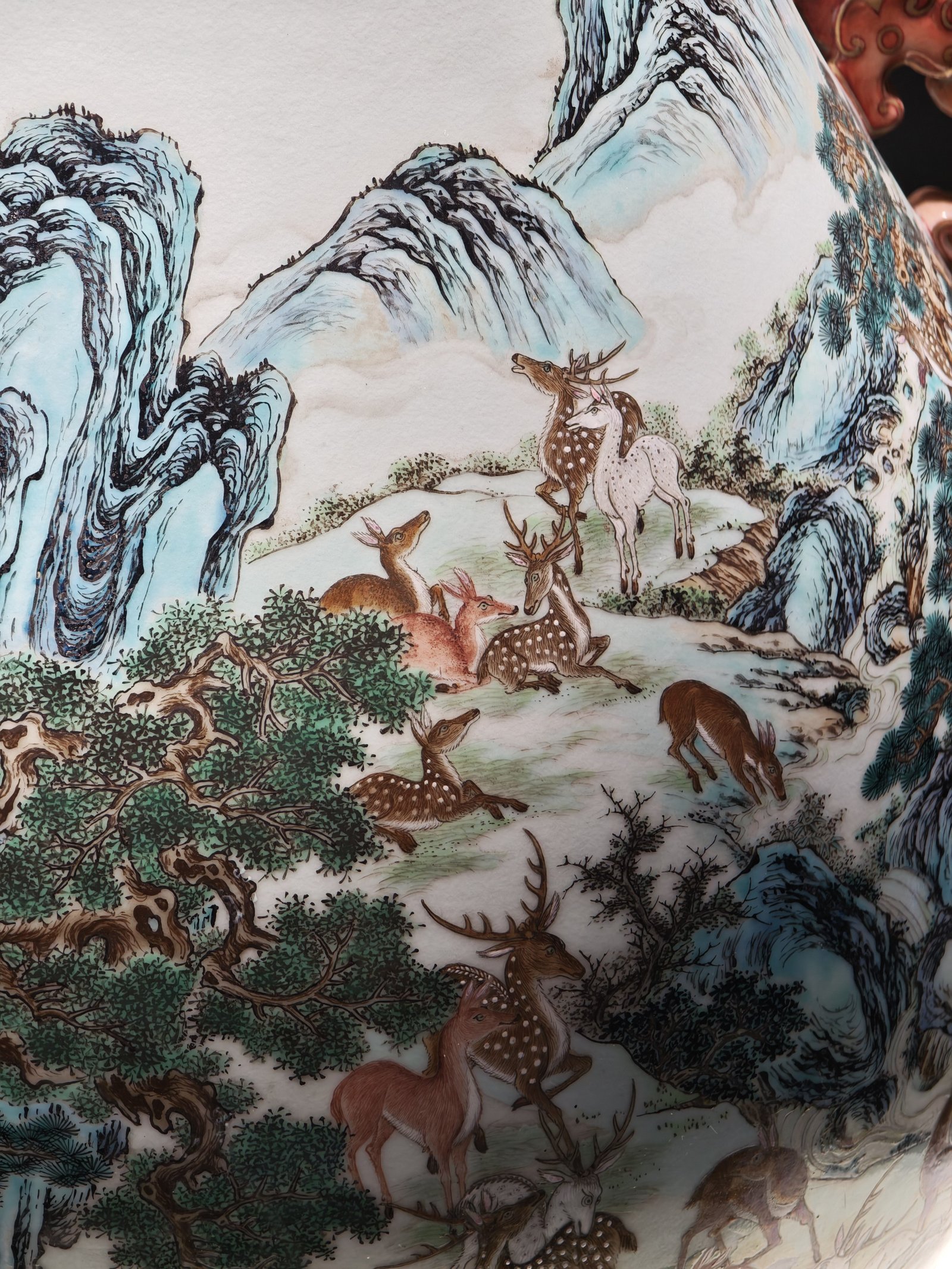
Famille rose “hundred deer” zun from the museum’s collection (detail)
This famille rose “hundred deer” zun, also known as the hundred-deer double-handled zun, shows a herd of sika deer, some lying down and some standing, each with its own bearing, amid craggy rocks and sturdy pines, the brushwork so fine it is almost gongbi-style. Looking closer, it is a landscape scroll slowly unrolling on the surface of the porcelain. After clay is shaped and fire has tempered it, it still needs a painter’s patient strokes, one by one, before a piece is truly complete.
The journalists traveling together all felt, without prompting, that for China porcelain has never been merely vessels and ornaments. A handful of clay, thrown, glazed and fired, becomes an object still dazzling a thousand years later; behind it lie the devotion and perseverance of generations of craftspeople, and also the way a civilization records itself. These porcelains once traveled to the world along the ancient Maritime Silk Road, and today remain a bridge for dialogue among civilizations.
Beyond the display cases, this ancient craft is still growing in today’s Jingdezhen. As Liu Jiangyi, Party secretary of the China National Light Industry Council, noted at the opening ceremony of the ceramics expo, Jingdezhen’s ceramics industry has become the country’s first single-ceramics industrial cluster worth over 100 billion yuan. From the glow in the dragon kiln to today’s industrial cluster, the road the thousand-year porcelain capital has traveled is one that keeps bringing tradition into the present.
Stepping out of the hall, from the kiln fire that rose in dragon kilns to the craft that continues in Jingdezhen today, this history has not stayed inside the display cases. How to protect it, pass it on and help more people read it is the question the thousand-year porcelain capital leaves for the present day, and an answer worth completing together.