Back to feed
Society
Chinese Media Executives and Influencers Tour Jingdezhen on Day One as the Thousand-Year Porcelain Capital Welcomes a Major Event
The 2026 Jiangxi tour for overseas Chinese media publishers, editors-in-chief and influencer bloggers visits Taobocheng
Eurasia Times, Jingdezhen — Reporter Wang Zilong
On October 18, the 2026 Jiangxi tour for overseas Chinese media publishers, editors-in-chief and influencer bloggers began its first day of field visits in Jingdezhen. Senior figures from overseas Chinese media and influencer bloggers from around the world visited the opening ceremony and exhibition halls of the Ceramics Expo, the Taoyangli Historical and Cultural Tourism Area and the Taoxichuan Spring and Autumn Fair, and watched the original production “Only Qingbai,” feeling the pulse of heritage and innovation in the thousand-year porcelain capital.
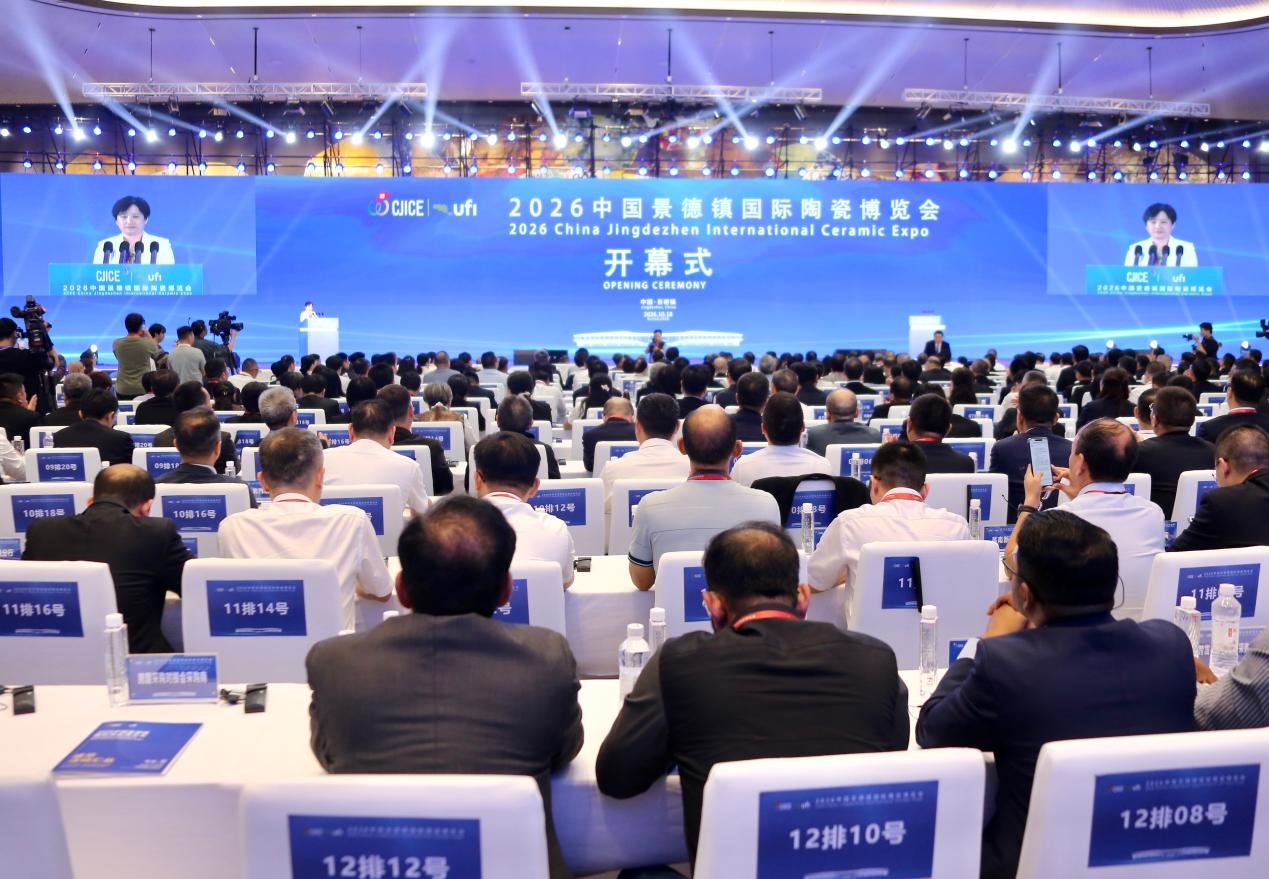
The opening ceremony of the 2026 China Jingdezhen International Ceramics Expo
Around 9 a.m., the 2026 China Jingdezhen International Ceramics Expo officially opened at Taobocheng, becoming the first stop where the media executives and influencer bloggers could observe new trends in the global ceramics industry and the openness and cooperation of Chinese ceramics. As an international ceramics event held for 22 consecutive editions, the expo is not only a platform for product display and trade matchmaking, but also an important window through which Jingdezhen uses porcelain as a medium to connect with the world.
At the opening ceremony, results for the 2026 Jingdezhen ceramic industry ecosystem were released one after another, including the “one map, four lists” results of the ceramics industry’s digital and intelligent transformation, the new series of standards for the 2026 “Made in Jingdezhen” regional brand, the Taobocheng Index, and the city-wide digital culture and tourism platform of the porcelain capital, letting the tour group see new progress in the Jingdezhen ceramics industry in branding, digital and intelligent upgrading, standardization, and the integration of culture and tourism.
It is understood that this year’s expo is themed “World Heritage Site, Global Porcelain Trade Port,” with a total exhibition area of 140,000 square meters, of which the Taobocheng International Convention and Exhibition Center covers 40,000 square meters, planned with 12 themed exhibition zones and one launch hall. It gathers more than 5,000 representative ceramic brands and well-known enterprises from porcelain-producing regions in China and abroad, including Spain, Germany, Russia, Denmark, the United Kingdom, Japan, South Korea and Finland, spanning daily-use ceramics, art ceramics, cultural and creative ceramics, advanced ceramics and ceramic supporting products.
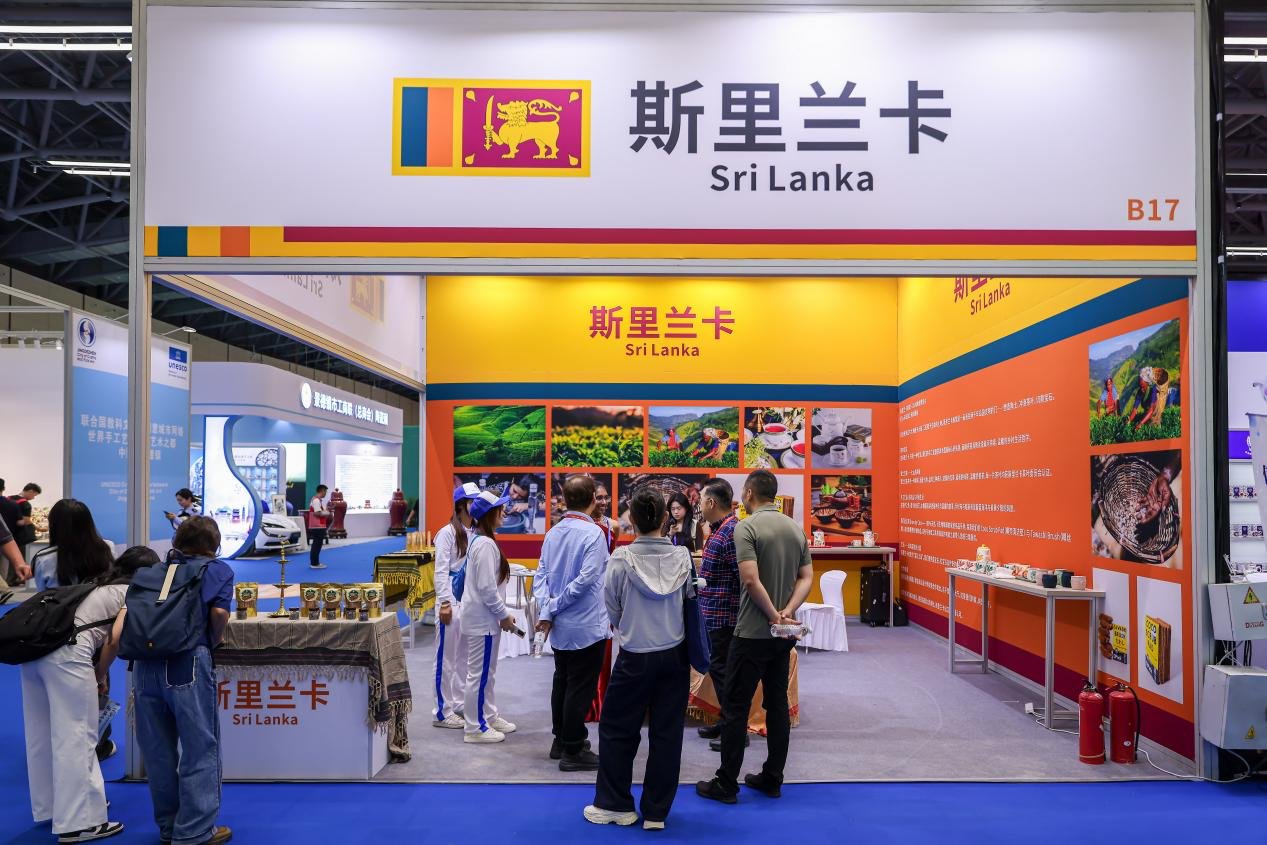
The tour group visits booths in the various exhibition halls
The exhibition halls were packed. The media and influencer group moved among the booths, sometimes bending down to study the glaze colors and patterns of porcelain, sometimes picking up thin porcelain cups and plates to feel them, and asking exhibitors about throwing, glazing and firing processes; when they came across technological applications such as industrial ceramic parts, many leaned in to photograph and record them, marveling.
Walking through the halls, members of the group saw not only a rich variety of ceramic products, but also the broad room for Jingdezhen ceramics to expand overseas. Lin Xingfa, acting general manager of Kwong Wah Yit Poh, said: “Jingdezhen now attracts a lot of young people to check in, and you can learn the whole process of ceramic making and industry development in one stop. Jingdezhen has a rich range of ceramic products and should go out to more overseas exhibitions and sales; we are also happy to tell Jingdezhen’s development story overseas and promote its new products.”
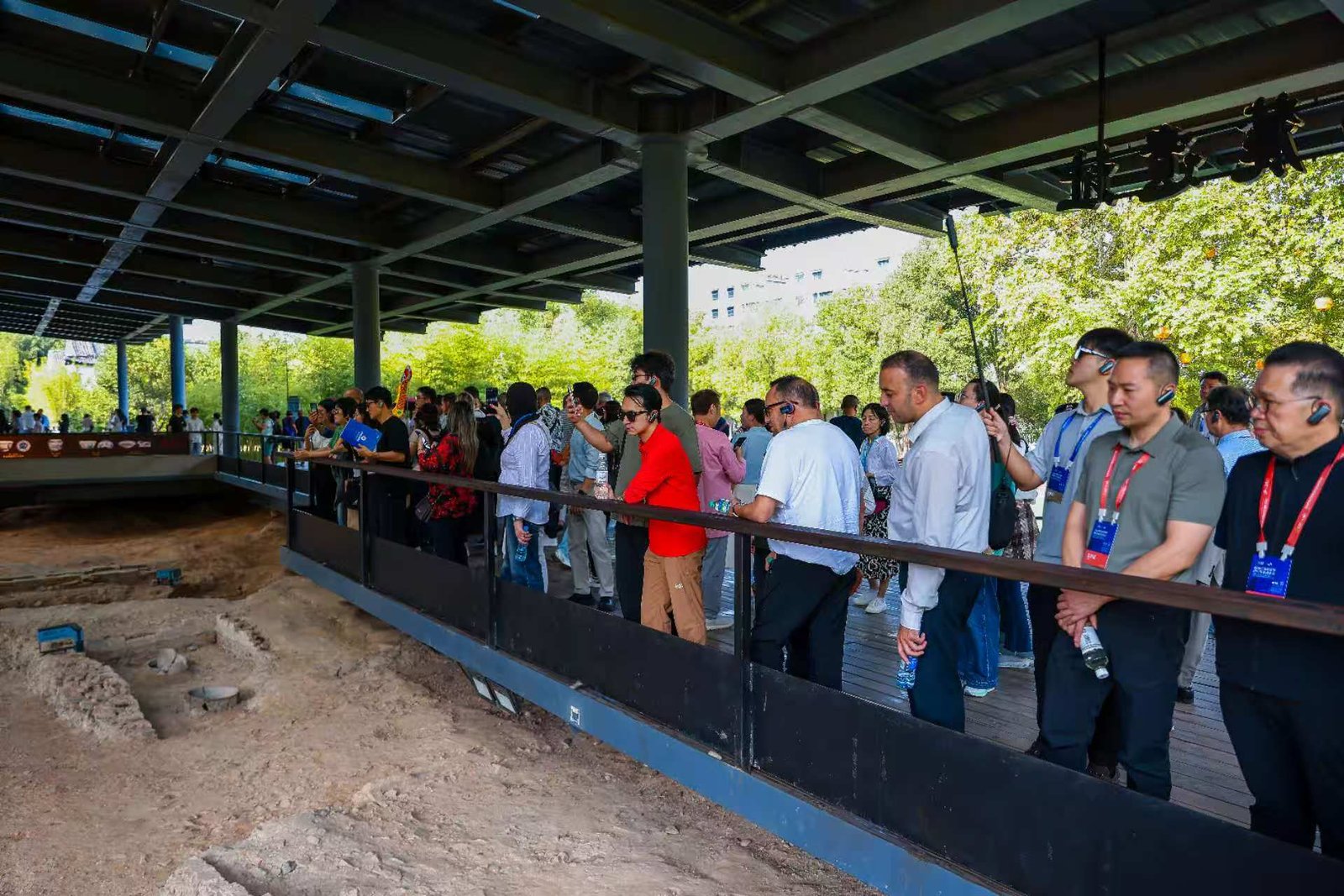
The tour group visits the Taoyangli Historical and Cultural Tourism Area
In the afternoon, the tour group entered the Taoyangli Historical and Cultural Tourism Area. Located in the heart of Jingdezhen, it holds 108 old-town lanes that have lasted a thousand years, the 650-year-old Imperial Kiln Site Park, a nationally protected site, more than 400 years of Ming and Qing kiln workshop clusters, and over 70 years of ceramic industrial heritage, and is known as “the pearl in the crown of the land of porcelain.”
Strolling through Taoyangli, the tour group walked through the old-town lanes, where the weight of the Imperial Kiln site, the weathered feel of the Ming and Qing kiln clusters, and the modern art spaces, creative shops and study workshops placed among them formed a wonderful dialogue. This dialogue between old and new is also reflected in how people in the ceramics trade carry things on. “I have great confidence in the development of Jingdezhen’s handmade porcelain industry,” said Wei Jiongcai, deputy publisher of China-America Post, who felt that younger practitioners are actively taking up the mission of development, inheriting the traditional strengths and honor of the older generation’s ceramic industry while keeping pace with the times and striving for excellence.
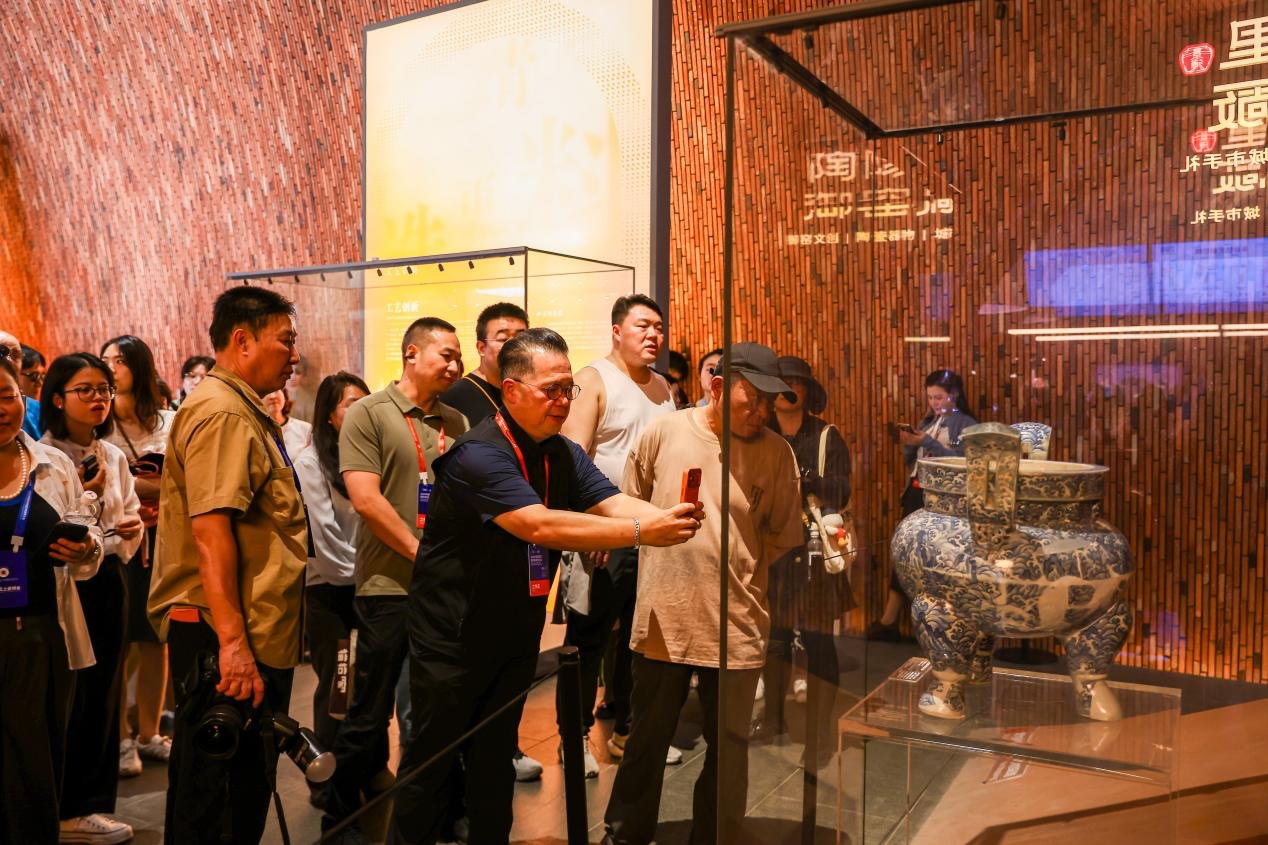
The tour group visits the Jingdezhen Imperial Kiln Museum
That evening, the tour group went to the Taoxichuan Grand Theater to watch Jingdezhen’s original production “Only Qingbai.” Set in the “Jingde era,” it tells the story of Bai Li, a Northern Song craftsman who throws and fires porcelain in Jingdezhen, and Qingqing, a porcelain girl who comes to know him through porcelain, turning steps such as throwing, carving and glaze blending into the language of dance. On stage, dancers trace the curves of porcelain and the flow of glaze with their bodies, holographic projections overlay virtual kiln fire on real dance movements, and Song-dynasty court music blends with modern scoring, condensing thousands of years of ceramic history, official kiln history and imperial kiln history into a small stage.
Meanwhile, in the Taoxichuan cultural and creative district, the Spring and Autumn Fair — Autumn Fair was in full swing. Converted from the former state-owned Universe Porcelain Factory, Taoxichuan is a national 4A-rated scenic area and a national cultural industry demonstration park that fully preserves its industrial relics — sawtooth-roof workshops, chimneys and old-style kilns — and is home to many “Jingpiao” artists and young creative entrepreneurs; its creative night market is known far and wide.
In the old factory halls, original handmade ceramics, art galleries, creative shops and market stalls stretched out one after another, and traditional ceramic craft collided and blended with contemporary creativity, letting members of the group feel a youthful vibe that differs from the ancient kiln sites. Sun Yongxin, national president of the Malaysia Influencers Union, couldn’t resist “endorsing” Jingdezhen: “The thousand-year porcelain capital not only has deep historical heritage, but also rich food and scenery, all of which give people a different kind of new experience. I hope all my friends in Malaysia can come to Jingdezhen.”